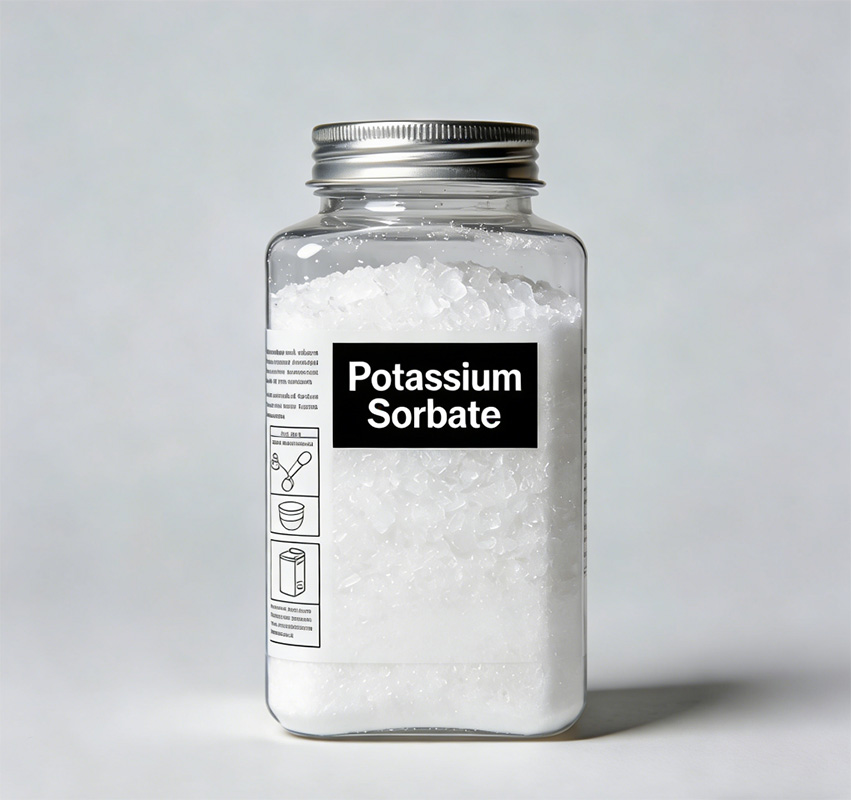
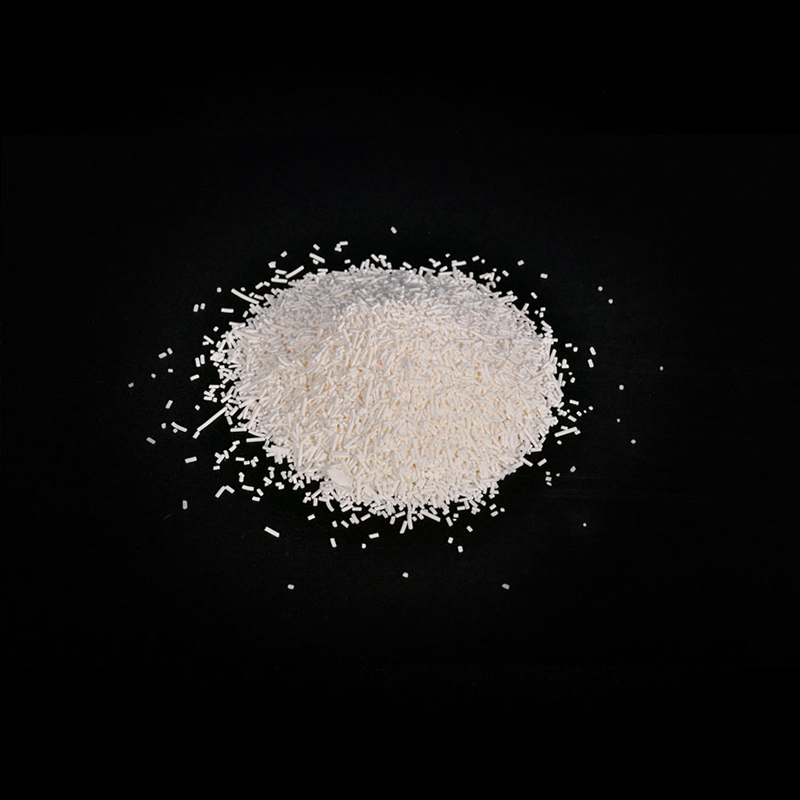
Potassium Sorbate
1. Effective Preservation
Sorbic acid (potassium sorbate) effectively inhibits mold, yeast, and aerobic bacteria, while also preventing the growth and reproduction of harmful microorganisms such as Clostridium botulinum, Staphylococcus, and Salmonella. It has minimal impact on beneficial microorganisms like anaerobic spore-forming bacteria and Lactobacillus acidophilus. Its primary action is inhibiting microbial development rather than outright sterilization, thereby extending the shelf life of food while preserving its original flavor. Its preservative efficacy is 5–10 times higher than that of sodium benzoate.
2. High Safety Profile
As an unsaturated fatty acid (salt), sorbic acid (potassium sorbate) is absorbed by the human metabolic system and rapidly broken down into carbon dioxide and water, leaving no residues in the body. Key safety data:
3. Excellent Stability
Sorbic acid (potassium sorbate) remains stable in sealed conditions. When exposed to humid air, it may absorb moisture, oxidize, and discolor. It demonstrates good thermal stability, with a decomposition temperature as high as 270°C.
4. Broad Application Scope
It is widely used in food, beverages, pickles, tobacco, pharmaceuticals, cosmetics, agricultural products, feed, and other industries, with its applications continuing to expand.
As an acidic preservative, it maintains effective preservative action in near-neutral foods (pH 6.0–6.5), whereas the efficacy of benzoic acid (sodium benzoate) declines significantly above pH 4 and may impart undesirable flavors.
5. Flexible Application Methods
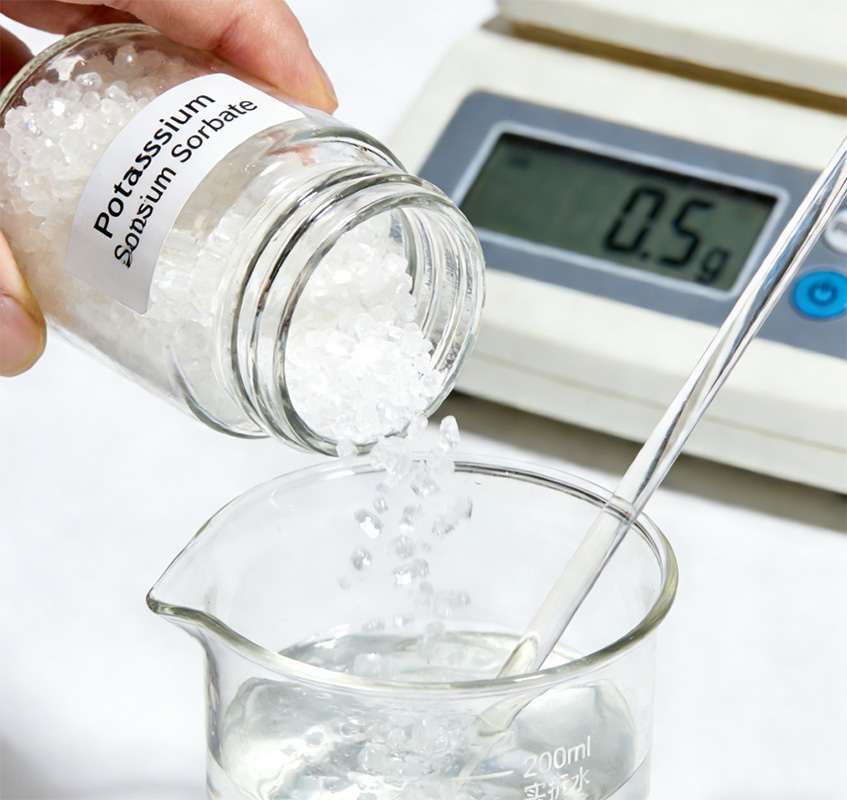
It can be applied through direct addition, spraying, immersion, dry powder spraying, or treatment on packaging materials, offering versatile usage options.

.jpg)


.jpg)