Applications
Sodium CMC is widely used in:
- Food industry – Thickener and stabilizer in ice cream, dairy drinks, instant noodles, and baked goods.
- Toothpaste & personal care – Main binder and thickener providing smooth texture and stability.
- Detergents & cleaners – Anti-redeposition agent and viscosity modifier.
- Paper & textile – Sizing agent and coating binder.
- Ceramics & building materials – Water retention agent and binder.
- Pharmaceuticals – Tablet binder and suspending agent in syrups.
Technical Specifications
| Product Name |
Sodium Carboxymethyl Cellulose |
| Appearance |
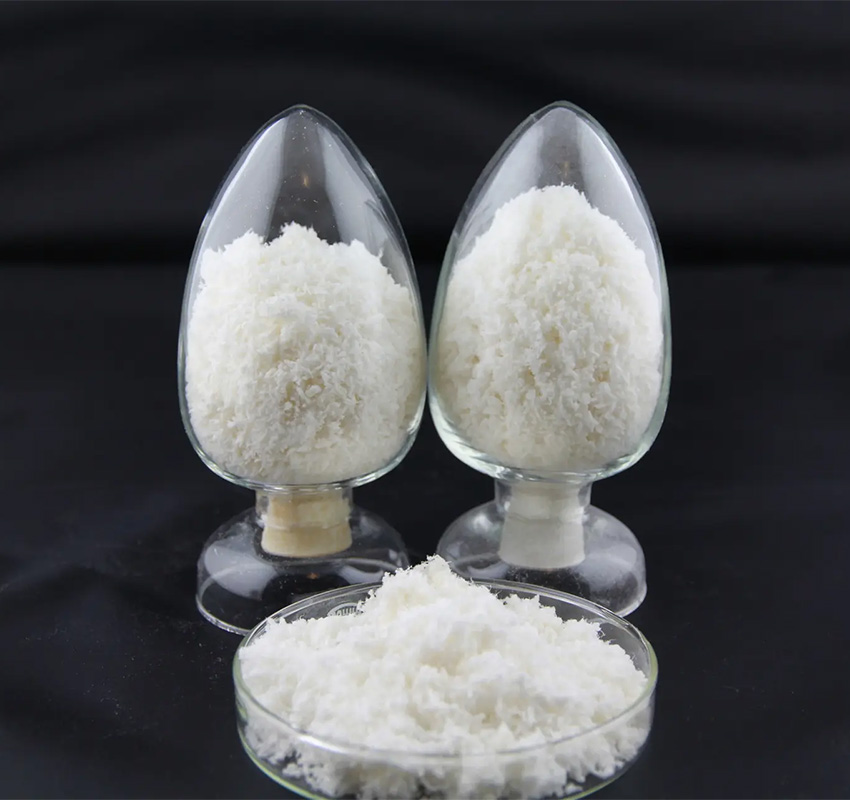
White or slightly yellow fibrous powder, odorless |
| Degree of Substitution (DS) |
0.80 – 0.95 |
| Viscosity (2% solution, mPa·s) |
800 – 1200;300 – 600;1200 – 2000 |
| pH (1% solution) |
6.0 – 8.5 |
| Moisture |
≤ 10.0% |
| Purity (NaCMC) |
≥ 99.5% |
| Mesh Size (Passing 80 mesh) |
≥ 99.0% |
| Packaging |
20kg or 25kg bag with PE inner liner |
FAQ
Q1: What are the differences between CMC FH9, FL10, and FVH9?
A: The primary difference is viscosity. FH9 is high viscosity, FL10 is medium viscosity, and FVH9 is very high viscosity. The choice depends on your required thickening power and application.
Q2: Is CMC soluble in cold water?
A: Yes, Sodium CMC is readily soluble in cold water, forming a clear, viscous colloidal solution. It disperses best with high-shear mixing.
Q3: What is the main function of CMC in food?
A: In food, it primarily acts as a thickener, stabilizer (prevents ingredient separation), water binder, and improves mouthfeel in products like ice cream, sauces, and beverages.
Q4: Is your CMC food grade?
A: Yes, we supply food-grade Sodium CMC that complies with FCC, USP-NF, and other international food safety standards.
Q5: What is the MOQ?
A: Standard MOQ is 500kg, but we can offer smaller quantities for trial orders.
Q6: Can CMC be used in combination with other gums?
A: Yes, CMC is often used synergistically with other hydrocolloids like xanthan gum or carrageenan to achieve specific texture and stability profiles.
Additional Features
- Available in food grade, pharmaceutical grade, and industrial grade.
- Technical data sheet (TDS) and material safety data sheet (MSDS) provided.
- Support for sample testing and application guidance.

.jpg)


.jpg)