Nullam dignissim, ante scelerisque the is euismod fermentum odio sem semper the is erat, a feugiat leo urna eget eros. Duis Aenean a imperdiet risus.
Nullam dignissim, ante scelerisque the is euismod fermentum odio sem semper the is erat, a feugiat leo urna eget eros. Duis Aenean a imperdiet risus.
 author
Choosing food raw materials is not a catalogue exercise. You need ingredients that fit the recipe, factory, local rules and budget. Before asking for a quote, answer three questions: What are you making? What keeps going wrong? What can your line handle?
Milk powders, fruit concentrates, stabilizers, sweeteners, vitamins, cultures, colors and flavors meet inside one formula. A low unit price means little if the drink separates, the powder cakes or one missing document delays clearance.
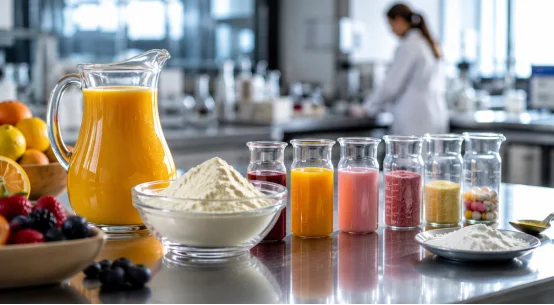
A practical brief saves time on both sides. Name the finished product, target taste, heat process, pack size, expected shelf life and destination market. Then say what failed in the last trial. “The yogurt releases whey after three days” is far more useful than “please send stabilizer price.”
| Quick Check: Which Problem Costs You Most?
□ Rework after separation or sedimentation □ Batch-to-batch flavor changes □ Powder that dissolves well in the lab but not on the production line □ Stock damage during hot or humid storage |
Your beverage may need a clean fruit note, stable pulp, controlled acidity or less sugar. Each target changes the ingredient choice. Small trials are not a formality here. They are cheaper than recalling a cloudy drink or rebuilding a formula after launch.
Apple juice concentrate may reach 70° Brix or higher, while orange and pineapple offer different aroma, color and acidity. Brix is a starting point, not a performance guarantee. Request a specification, certificate of analysis and sample. Make the drink at the real dilution, pasteurize it, then taste it the next day.
Compound thickeners and CMC can support suspension, mouthfeel and stability, but the result depends on pH, solids and heat. Drinkable yogurt needs a different structure from a thick fruit drink. Sweeteners also change flavor: acesulfame potassium is roughly 200 times sweeter than sucrose, sucralose about 600 times, while dextrose is milder. Test the blend in the final recipe.
Whole milk powder brings milk fat and a fuller dairy profile; source specifications show protein at 24% or higher. Skim milk powder keeps fat at 1.5% or less. Check protein, fat, moisture, solubility, heat response and flavor. A powder that looks fine in a jar may foam, lump or taste flat on a full line.
| Market Watch: Ask How Long the Quote Is Valid
On 21 July 2026, the GDT Price Index rose 1.5%. Whole milk powder increased 1.6% to US$3,486/MT and skim milk powder rose 2.8% to US$3,234/MT. GDT released another event in early August, so prices may move again before booking. Is this a spot order, three-month cover or a launch that cannot tolerate a gap? A split order may fit better than one all-or-nothing bet. |
Earlier April auctions also showed why one headline can mislead. Whole milk powder and skim milk powder moved in different directions, while milkfat fell more sharply. The market was soft, but buyers were still trading. Watch product-specific prices, freight and landed cost together.
Nutrition products need accurate dosing and steady nutrient content across batches. Vitamin C may support nutrition, color protection and antioxidant control. A customized premix can combine vitamins A, B complex, C, D, E or K in set proportions, while stabilization or encapsulation may reduce losses during processing and storage.
Ask one extra question during development: What remains at the end of shelf life, not only at the time of production? Also test sweeteners, milk solids and vitamin notes together. A technically correct premix can still leave an awkward aftertaste.
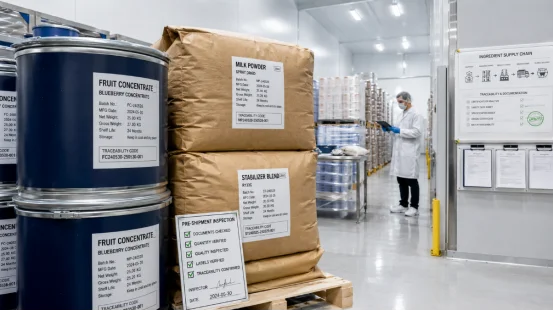
For African manufacturers, long transit times, hot warehouses and changing freight conditions can change the buying decision. Milk powder attracts moisture. A torn liner or wet unloading area can create caking before the bag reaches production. Use pallets, keep bags away from walls, record batch numbers and follow FIFO.
| Landed-Cost Challenge
Compare two offers using this simple question: unit price + freight + duties + storage loss + delay risk. Which one is actually cheaper? If one delayed stabilizer stops the whole beverage line, the cheapest invoice was not the cheapest purchase. |
Before shipment, verify the product name, grade, quantity, packaging, destination documents, certificate of analysis and batch details. Policy changes can also affect customs treatment, so review the current tariff and import rules before each order, not once a year.
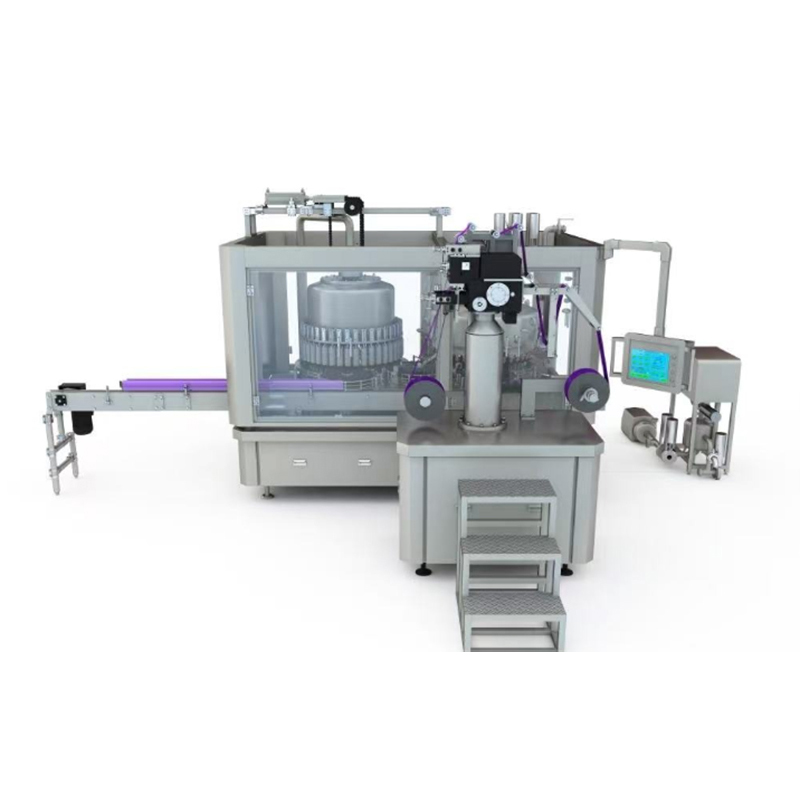
HUAFEI presents a connected sourcing model. Its official range covers food raw materials, additives, flavors, packaging materials and related machinery, supported by procurement coordination, logistics, customs-document help and technical services for African markets.
This matters when a project needs milk powder, stabilizer, flavor and packaging in one plan. HUAFEI states that it supplied milk powder and stabilizer blends to a Lagos dairy producer in 2025. Ask for specifications, samples, shipment scope and references relevant to your product.
A supplier can respond more clearly when the question is clear. It also gives you a fair way to compare samples and quotations. No mystery, less back-and-forth.
Recent dairy-market figures: Global Dairy Trade event results and AHDB GDT event summary. Product and service details: HUAFEI official website. Market prices change frequently; confirm live quotations before purchasing.
Q1: Which food raw materials are common in beverage production?
A: Fruit concentrates, milk powders, stabilizers, sweeteners, acids, preservatives, colors and flavors are common. The final choice depends on pH, heat treatment, taste and shelf-life goals.
Q2: How should you compare whole and skim milk powder?
A: Compare fat, protein, moisture, solubility, flavor, heat response, price validity and the role of the powder in your recipe.
Q3: Why should you run a production trial?
A: A lab sample cannot fully copy factory mixing, pasteurization, filling and storage. A controlled line trial reveals separation, foaming, flavor loss and handling problems.
Q4: What documents should you request?
A: Ask for the specification, certificate of analysis, batch data, available quality certificates, origin documents and the paperwork required by the destination market.
Q5: Should you buy after one GDT price move?
A: Not automatically. Check your stock, shipment lead time, quote validity, freight and product-specific price trend. A staggered purchase may suit uncertain markets better than a single large order.


Why Citrus Flavors Still Work in Soft Drinks, Tea Drinks and Energy Drinks

.jpg)

.jpg)