Nullam dignissim, ante scelerisque the is euismod fermentum odio sem semper the is erat, a feugiat leo urna eget eros. Duis Aenean a imperdiet risus.
Nullam dignissim, ante scelerisque the is euismod fermentum odio sem semper the is erat, a feugiat leo urna eget eros. Duis Aenean a imperdiet risus.
 author
Choosing a food flavor supplier rarely starts with the real question. A small bottle arrives, the aroma smells promising, and everyone wants to move quickly. For a food manufacturer, though, the harder question comes next: will this flavor work in the finished product, survive the process, match the label plan and arrive again when production needs it?
That sounds less romantic than talking about mango, vanilla or apple notes. It is also where most sourcing problems begin.
A sample can smell right and still fail in a drink, a bakery filling or a dairy base. The flavor may fade after heating, separate in the formula, sit too heavily on the aftertaste or come with documents that do not match the target market. Before placing a bulk order, manufacturers need to check the supplier as carefully as the flavor itself.
This guide focuses on one category only: food flavors for industrial food and beverage manufacturing. It does not discuss general food raw materials or any restricted commodity trade.
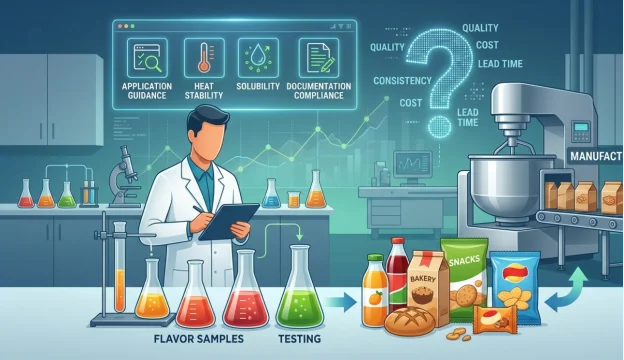
A food flavor supplier needs to provide more than a name, a price and a small sample. At a basic level, the buyer needs application guidance, sample codes, recommended dosage ranges, product specifications, storage information and export documents when required.
For manufacturers sourcing from overseas, this support matters because R&D, purchasing and quality control are usually not asking the same question. R&D wants a flavor that performs in the formula. Purchasing wants price, MOQ and lead time. Quality control wants documents, traceability and clear labeling support.
HUAFEI supplies food flavors and fragrances for food and beverage applications, including fruit, milk, cream, coconut, vanilla and other profiles. Still, the category page is only a starting point. A good flavor supplier for beverage and bakery products will ask where the flavor will be used before recommending a grade.
If a supplier sends flavor names without asking about the application, be careful. The same apple, mango or milk profile may need different carriers, solubility and strength depending on the finished product.
Flavor selection begins with the product, not the flavor list. A beverage flavor needs clarity, solubility and freshness in the drink base. A bakery flavor needs enough body to remain noticeable after heating. A dairy or cream product needs a profile that works with fat, protein and acidity.
This is why food flavors belong inside the real formula during testing whenever possible. Water testing can show aroma direction, but it does not show everything. It will not fully reveal aftertaste, mouthfeel, processing loss or interaction with the base.
For beverage flavors, fruit profiles such as Apple Flavor may need to stay bright in still drinks, juice drinks or flavored dairy drinks. Tropical profiles such as Mango Flavor may be chosen for a stronger fruit impression, but the trial still has to confirm dosage and stability in the actual product.
Before asking for food flavor samples, send a short application brief. Include the product type, process temperature, whether the formula is water-based or oil-based, target shelf life, packaging format and the taste direction you want. A one-page brief is enough for the first discussion.
Three checks come before bulk purchasing: solubility, heat stability and dosage. They sound ordinary, but they decide whether the flavor can move from lab trial to production.
Solubility comes first. A water-soluble flavor may work well in beverages but perform poorly in a fat-rich filling. An oil-soluble flavor may suit some coatings or cream systems but create problems in a clear drink. Powder flavors raise their own handling questions, including blending, dust control and moisture sensitivity.
Heat stability is the next check. Some flavors smell clean in a cold sample and become weak after baking, pasteurization or hot filling. Others hold their character better, but may need a lower or higher dose to avoid a heavy note.
Treat dosage as a working range, not a magic number. Start with the supplier’s suggested level, then run a small ladder test in the real base. Test low, middle and high levels. Taste the product fresh, then check it again after storage.
This part is not glamorous. It is just cheaper than discovering the flavor problem after labels, packaging and production slots have already been arranged.
Samples protect both sides. The buyer avoids committing to the wrong material, and the supplier gets better feedback before preparing a bulk flavor supply plan.
Keep the sample process organized. Record the supplier name, sample code, flavor type, suggested dosage, test formula, preparation date and comments from each evaluator. If the factory already has a product in production, keep one current formula as a control sample.
During evaluation, check aroma, taste impression, aftertaste, mouthfeel, color impact and stability after processing. In beverages, watch for cloudiness, sediment and separation. In bakery or snack applications, check what remains after heating. In dairy-style systems, check whether the flavor feels clean or fights with the base.
One detail is easy to miss: ask whether the sample is the same grade intended for bulk supply. A trial sample may look perfect, but the commercial grade must match in carrier, strength, origin and documentation. Get that confirmed before the purchasing team starts negotiating.
Flavor documents are not paperwork for paperwork’s sake. They help the quality team decide whether the material can enter the factory and whether the finished product label can be prepared correctly.
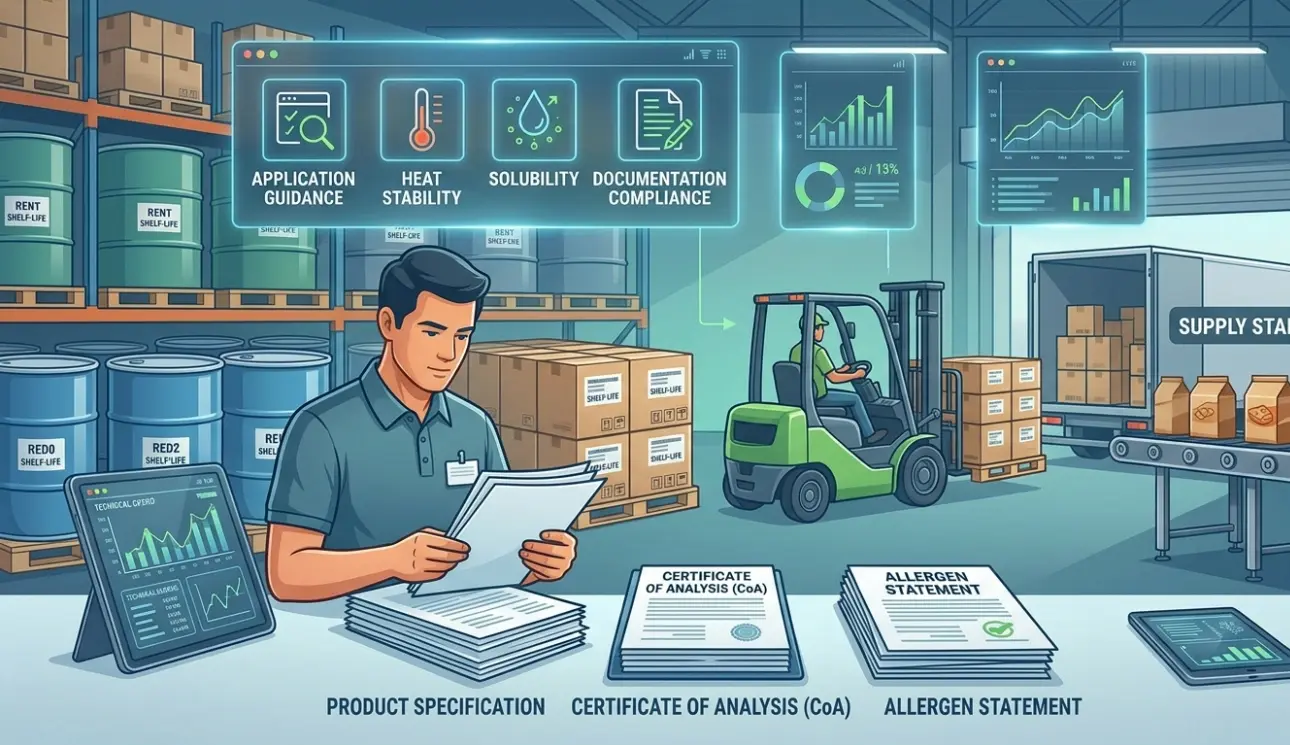
For most projects, buyers can start with a product specification, certificate of analysis when applicable, allergen statement, shelf-life information, storage conditions and origin or export documents when required. The exact document set depends on the finished product and the destination market.
Labeling also needs early attention. U.S. rules under 21 CFR 101.22 distinguish natural flavor, artificial flavor and related declarations for foods. Not every manufacturer sells to the U.S., but the rule is a useful reminder that flavor wording is not just marketing language. It can affect the finished label.
Check color separately from flavor. A color may support a lemon, orange or grape impression, but color additives are not the same as flavor ingredients. If the formula uses both, the buyer needs the correct documents for each material instead of treating them as one package.
When in doubt, ask the supplier to explain what each document supports. A serious food flavor supplier can help the buyer understand what is available, what is not available and what still needs local regulatory confirmation.
Once a finished product enters the market, changing flavor is painful. Consumers may not know the technical reason, but they notice when a drink tastes flatter or a bakery filling smells different from the previous batch.
That is why supply stability belongs in the discussion before the first large order. Ask about lead time, MOQ, packing size, shelf life, storage conditions, repeat-batch availability and expected document timing. For manufacturers serving African markets, shipment planning can be just as important as the sample itself.
HUAFEI’s procurement management service is relevant here because flavor sourcing is not only a tasting job. It also involves supplier matching, document follow-up, warehousing, logistics communication and delivery coordination.
A practical approval route is simple. Define the application. Test samples in the real formula. Confirm documents and labeling needs. Check bulk supply conditions. Then negotiate the commercial order.
It may feel slower at the start. In practice, it often saves time because the factory is not fixing avoidable flavor problems after the shipment has already arrived.
Ask about the recommended application, dosage range, solubility, heat stability, shelf life, storage conditions, sample availability and required documents. For export projects, also ask whether the supplier can support the document set needed by the destination market.
The terms often appear together, but food manufacturing usually focuses on flavor performance in the finished product. Fragrance describes aroma, while flavor also includes taste impression, aftertaste, mouthfeel and behavior in the formula.
Test samples in the real product base, not only in water. Use several dosage levels, record the sample code and preparation method, then check the product fresh and after storage.
Common documents include a specification sheet, certificate of analysis when applicable, allergen statement, storage and shelf-life information, origin documents and labeling or declaration guidance. Exact requirements depend on the destination market and finished product category.



.jpg)

.jpg)