Applications
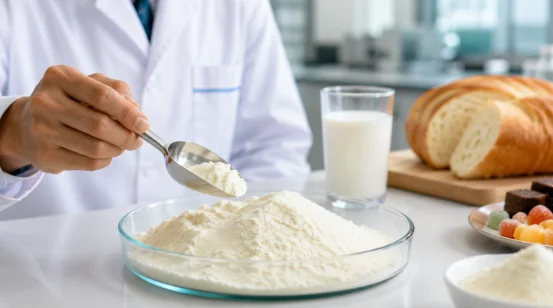
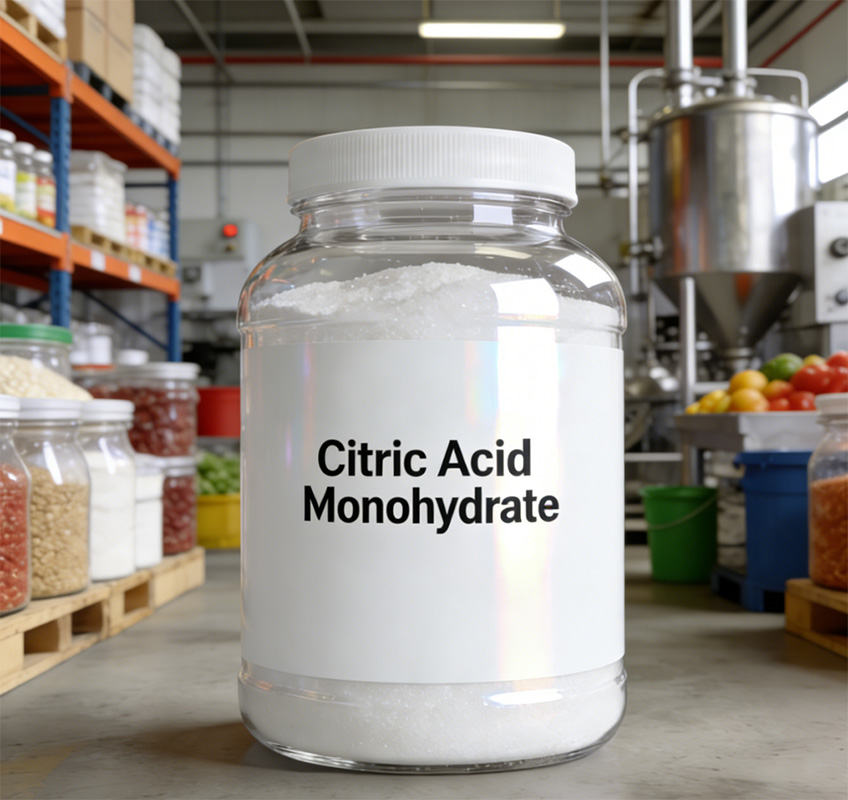
Citric Acid Monohydrate is widely used in:
- Beverages – The primary acidulant in soft drinks, fruit juices, iced teas, and energy drinks.
- Food products – Provides tartness in jams, jellies, candies, dairy products (like some cheeses), and canned fruits/vegetables.
- Pharmaceuticals – Used as an effervescent agent in tablets/powders and to adjust pH in syrups and solutions.
- Personal care & cleaning – pH adjuster and chelating agent in cosmetics, detergents, and descaling agents.
- Industrial applications – Water softening, metal cleaning, and in electroplating baths.
Technical Specifications
| Product Name |
Citric Acid Monohydrate (Food Grade) |
| CAS No. |
5949-29-1 |
| Appearance |
Colorless or white crystalline granules or powder |
| Assay (on dried basis) |
99.5% – 100.5% |
| Loss on Drying |
7.5% – 9.0% (Theoretical: 8.58%) |
| Sulfate Ash (Residue on Ignition) |
≤ 0.05% |
| Oxalate |
Passes test (≤ 100 mg/kg) |
| Heavy Metals (as Pb) |
≤ 5 mg/kg |
| Solubility |
Very soluble in water, freely soluble in ethanol |
| Packaging |
25kg multi-wall paper bag with PE liner |
FAQ
Q1: What is the difference between Citric Acid Monohydrate and Anhydrous Citric Acid?
A: The monohydrate form contains one molecule of water of crystallization (approx. 8.6% by weight), while the anhydrous form contains no water. Functionally, they are equivalent, but the monohydrate is slightly less concentrated. The choice depends on moisture sensitivity of the final product and processing conditions.
Q2: Is citric acid natural?
A: Citric acid is found naturally in citrus fruits. Commercially, it is produced via microbial fermentation of carbohydrates (e.g., from corn), which is considered a natural process. The final product is chemically identical to natural citric acid.
Q3: What is its role as a preservative?
A: It lowers the pH of food, creating an environment less hospitable to many spoilage microorganisms. It also chelates (binds) metal ions like iron and copper, which are necessary for the growth of some bacteria and can catalyze oxidative rancidity.
Q4: What is the typical usage level in beverages?
A: In beverages, usage typically ranges from 0.1% to 0.3% (1-3 g/L), depending on the desired tartness and pH. In sour candies, it can be much higher (1-2%).
Q5: What is the MOQ?
A: Standard MOQ is 1 metric ton (40 bags of 25kg). Truckload or container load orders are common.
Q6: Do you supply different granulations?
A: Yes, we can supply fine powder, granular, and coarse granular sizes suitable for different applications (e.g., powder for dry mixes, granules for easier handling in beverage plants).
Additional Features
- Available in food grade (FCC), pharmaceutical grade (USP), and Kosher/Halal certifications.
- Stable supply from leading fermentation manufacturers.


.jpg)
.jpg)