Applications
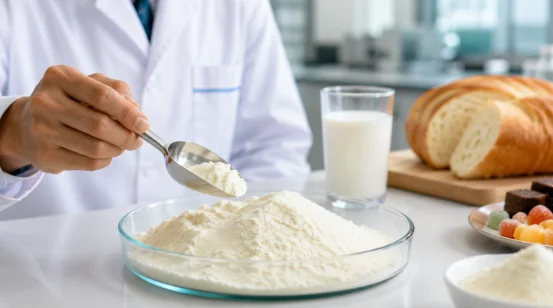
Vitamin C is widely used in:
- Beverages – Antioxidant in fruit juices, soft drinks, and sports drinks to prevent flavor degradation and browning.
- Meat processing – Curing agent and color fixative in sausages, ham, and other cured meats.
- Fruit & vegetable processing – Anti-browning agent in canned, frozen, and dried products.
- Bakery – Flour improver (as ascorbic acid) to strengthen gluten and improve bread texture.
- Dairy products – Antioxidant in some milk-based drinks and infant formula.
- Dietary supplements – Direct tableting or encapsulation for vitamin C supplements.
Technical Specifications
| Product Name |
L-Ascorbic Acid (Vitamin C) |
| CAS No. |
50-81-7 |
| Appearance |
White or slightly yellow crystalline powder or granules |
| Assay |
≥ 99.0% |
| Specific Rotation [α]20/D |
+20.5° to +21.5° |
| Loss on Drying |
≤ 0.4% |
| Heavy Metals (as Pb) |
≤ 10 mg/kg |
| Residue on Ignition |
≤ 0.1% |
| Solubility |
Freely soluble in water, sparingly soluble in ethanol |
| Packaging |
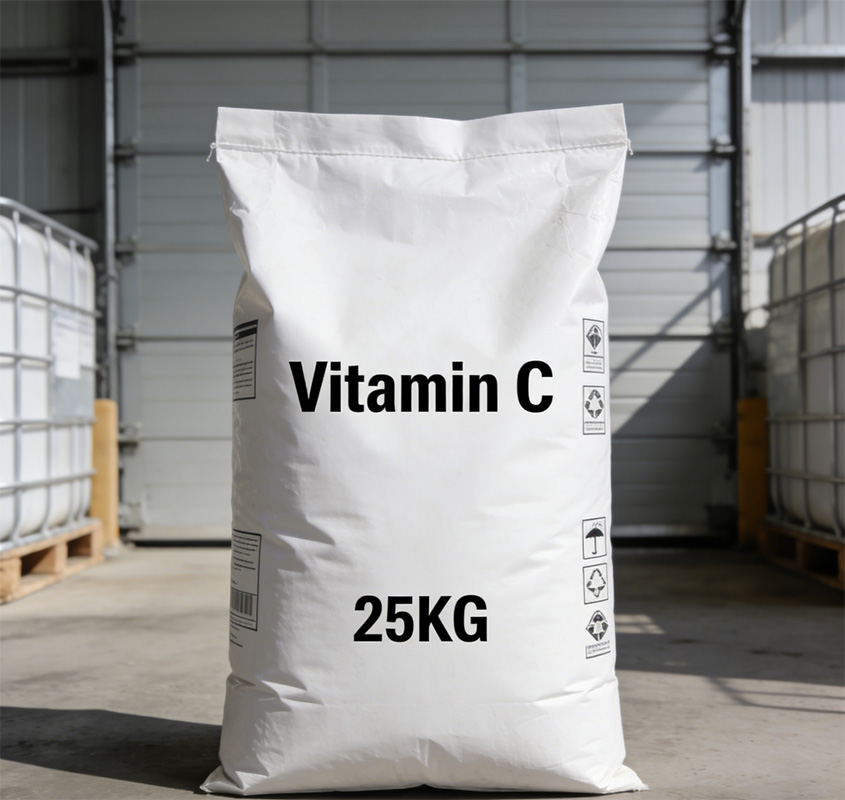
25kg fiber drum with double PE liner or aluminum foil bag |
FAQ
Q1: What is the difference between Ascorbic Acid and Sodium Ascorbate?
A: Ascorbic Acid is the acidic form of Vitamin C. Sodium Ascorbate is its sodium salt, which is less acidic (pH neutral) and often used in applications where a pH increase is undesirable, or for individuals sensitive to acid. Both provide Vitamin C activity.
Q2: How does Vitamin C work as an antioxidant in beverages?
A: It reacts with and consumes dissolved oxygen in the product before the oxygen can react with flavors, colors, or nutrients, thereby preventing oxidation and staleness. It also regenerates other antioxidants like Vitamin E.
Q3: Is your Vitamin C derived from natural or synthetic sources?
A: Commercially, nearly all L-Ascorbic Acid is produced via a fermentation process from glucose, which is considered natural. The final molecule is identical to that found in citrus fruits. We can supply fermentation-derived product.
Q4: What is its role in bread making?
A: In bread (as a flour treatment agent, E300), it strengthens the gluten network by promoting disulfide bond formation, resulting in better dough elasticity, increased volume, and finer crumb structure.
Q5: What is the stability of Vitamin C during processing?
A: It is sensitive to heat, light, oxygen, and high pH. Losses occur during processing. It is most stable in acidic, low-oxygen, and opaque packaging conditions. Overages are often added to compensate for processing and storage losses.
Q6: What is the MOQ?
A: Standard MOQ is 25kg. We supply in various packaging options from 1kg to 25kg.
Additional Features
- Available in food grade (FCC), pharmaceutical grade (USP), and Kosher/Halal.
- Can be supplied in different particle sizes for specific applications (e.g., fine powder for tablets, granules for beverages).

.jpg)

.jpg)