Applications
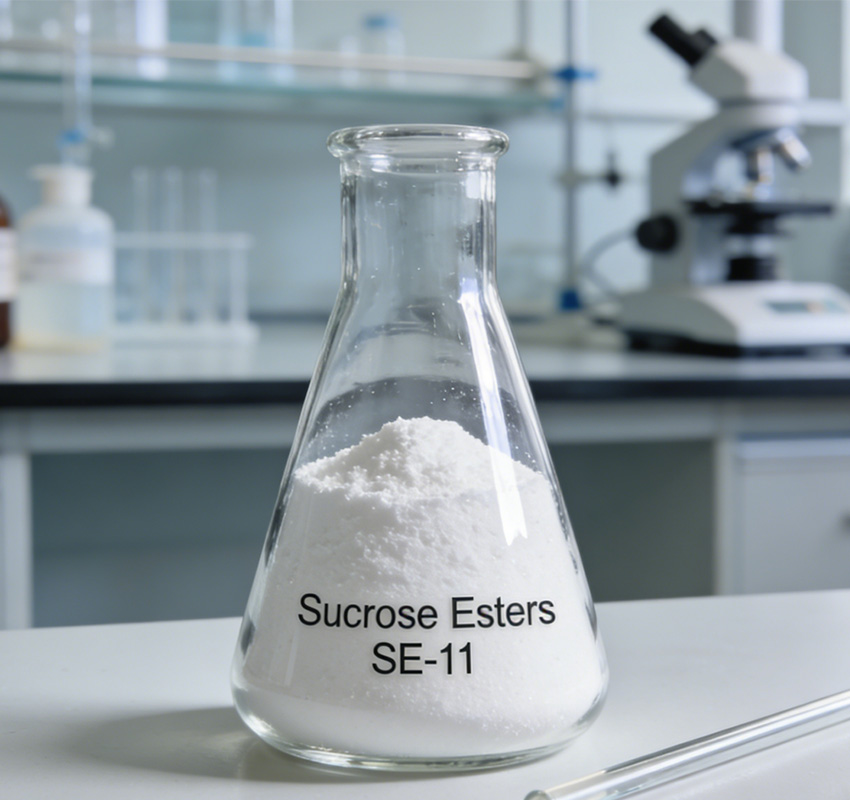
Sucrose Ester SE-11 is widely used in:
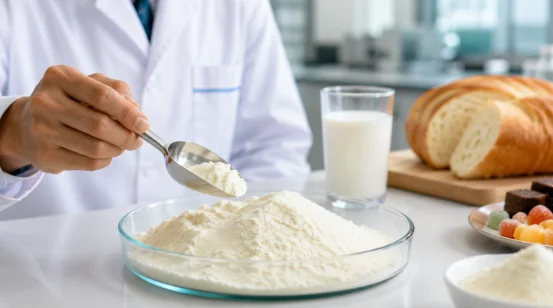
- Dairy products – Ice cream (improves overrun and texture), whipped cream, coffee creamers.
- Bakery – Cakes, breads, and muffins to increase volume, softness, and shelf life.
- Confectionery – Chocolates and coatings to reduce viscosity and prevent bloom.
- Beverages – Emulsifier in creamy liqueurs and protein-fortified drinks.
- Instant foods – Improves dispersibility and stability of powdered milk, soups, and sauces.
Technical Specifications
| Product Name |
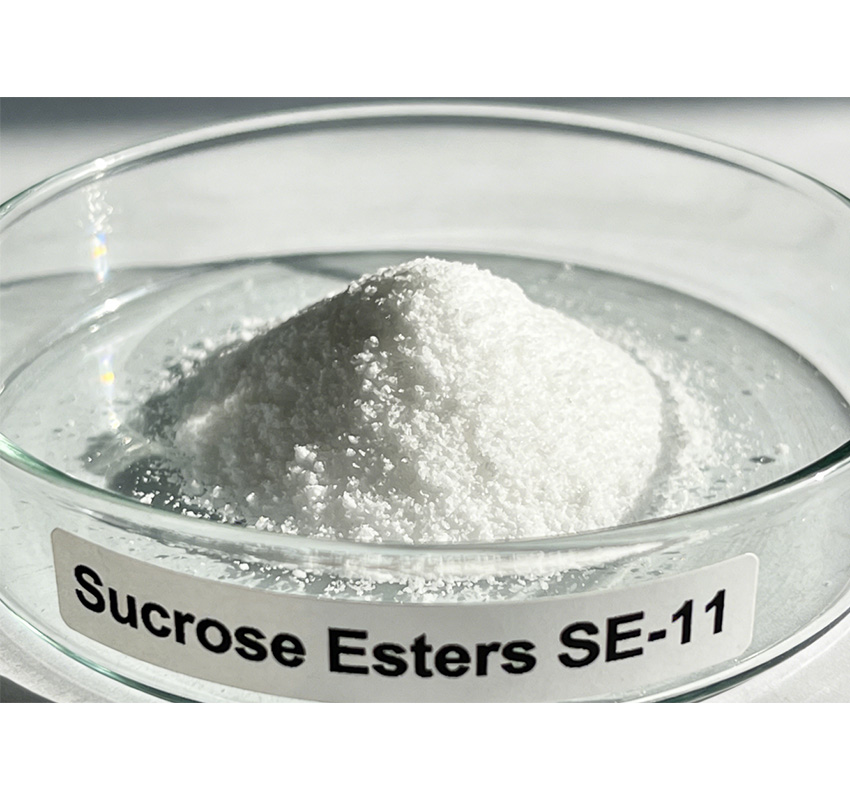
Sucrose Ester of Fatty Acids (SE-11, HLB ~11) |
| Appearance |
White to off-white powder, flakes, or granules |
| HLB Value |
10 – 12 (Typical for SE-11) |
| Acid Value |
≤ 5.0 mg KOH/g |
| Free Sucrose |
≤ 10.0% |
| Loss on Drying |
≤ 3.0% |
| Residue on Ignition |
≤ 1.5% |
| Heavy Metals (as Pb) |
≤ 10 mg/kg |
| Solubility |
Dispersible in hot water, soluble in ethanol and oils |
| Packaging |
20kg or 25kg carton or fiber drum with PE bag |
FAQ
Q1: What does HLB 11 mean?
A: HLB (Hydrophilic-Lipophilic Balance) indicates an emulsifier’s affinity for water or oil. HLB 11 is in the range for oil-in-water (O/W) emulsifiers, meaning it helps disperse oil droplets uniformly in a continuous water phase, stabilizing systems like creamy drinks, ice cream, and sauces.
Q2: How does it improve bread shelf life?
A: It complexes with starch molecules (amylose), slowing down the process of retrogradation where starch recrystallizes and causes firming/staling. This keeps bread softer for longer.
Q3: Is it suitable for organic products?
A: Sucrose esters can be produced from organic sucrose and organic fatty acids. We can supply organic-certified sucrose esters upon request and verification of certification requirements.
Q4: What is the typical usage level?
A: Usage is low, typically 0.1% to 0.5% of the total product weight, depending on the application. In ice cream, it might be 0.1-0.2%; in bread, 0.3-0.5%.
Q5: How should it be incorporated?
A: It can be dissolved in warm water or oil, or dry-mixed with other powders (like flour or sugar) before adding to the main batch. For best results, it should be evenly distributed and hydrated.
Q6: What is the MOQ?
A: Standard MOQ is 25kg. Sample quantities (1kg) are available.
Additional Features
- Can act as a crystallization modifier in fats and sugars.
- Improves the stability of protein foams.
· Available in different HLB values (SE-3, SE-7, SE-15, etc.) for various applications

.jpg)
.jpg)