Applications
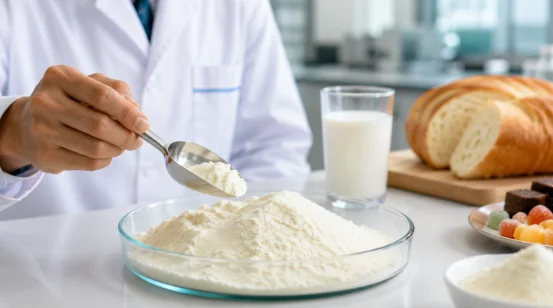
- Glucose Monohydrate is widely used in:
- Sports & energy drinks – Rapid carbohydrate source for quick energy replenishment.
- Bakery industry – Fermentable sugar for yeast activity, browning, and soft texture in bread and cakes.
- Confectionery – Used in fondants, chewing gum, and hard candies to control crystallization and texture.
- Pharmaceuticals – As an excipient in tablet formulations and in intravenous solutions.
- Fermentation industry – Primary carbon source in microbial fermentation for antibiotics, enzymes, etc.
- Animal feed – Energy supplement.
Technical Specifications
| Product Name |
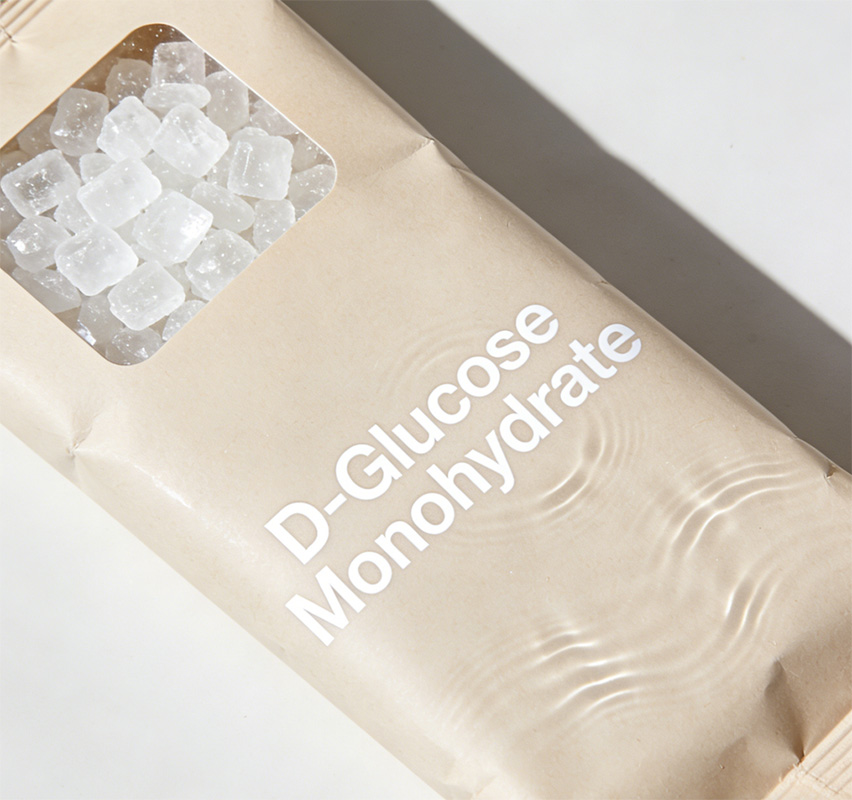
D-Glucose Monohydrate (Dextrose Monohydrate) |
| CAS No. |
5996-10-1 |
| Appearance |
White crystalline powder or granules |
| Assay (on dried basis) |
≥ 99.5% |
| Loss on Drying |
7.5% – 9.5% (Theoretical: 9.1%) |
| Specific Rotation [α]20/D |
+52.5° to +53.5° |
| Sulfate Ash |
≤ 0.05% |
| Heavy Metals (as Pb) |
≤ 5 mg/kg |
| Solution Appearance (10%) |
Clear, colorless |
| Packaging |
25kg multi-wall paper bag with PE liner |
FAQ
Q1: What is the difference between glucose and dextrose?
A: In the food industry, “dextrose” usually refers to the commercially produced D-glucose, typically from corn starch hydrolysis. They are chemically the same. “D-Glucose Monohydrate” is the crystalline form containing one water molecule.
Q2: How sweet is it compared to sugar?
A: D-Glucose (Dextrose) is about 70-80% as sweet as sucrose (table sugar), making it less sweet and useful for balancing sweetness profiles.
Q3: Is it suitable for diabetic products?
A: No, D-Glucose is a simple sugar that raises blood glucose levels rapidly. It is not suitable for diabetic foods. For reduced-glycemic products, consider sweeteners like isomaltulose or polyols.
Q4: Why is it used in bakery?
A: In baking, it serves as a fermentable sugar for yeast, contributes to Maillard browning (color), and helps retain moisture, extending shelf life.
Q5: What is the MOQ?
A: Standard MOQ is 1 metric ton (40 bags of 25kg). Truckload or container load orders are common.
Q6: Do you supply food and pharmaceutical grades?
A: Yes, we supply food-grade (FCC) and can also provide USP/Pharmaceutical grade D-Glucose Monohydrate upon request.
Additional Features
- Available in fine powder and granular forms.
- Consistent supply from reliable starch processors.
- Documentation (COA, MSDS) provided.


.jpg)


.jpg)