Applications
GMS is widely used in:
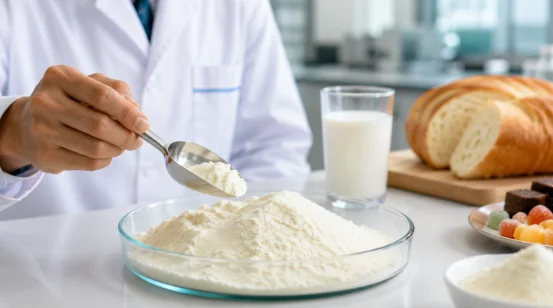
- Bakery – Bread, cakes, and pastries to improve volume, softness, and extend shelf life.
- Dairy analogs – Coffee whiteners, whipped toppings, and imitation dairy products.
- Confectionery – Chewing gum base, chocolates, and toffies.
- Margarine & shortening – Improves spreadability, texture, and prevents water separation.
- Personal care – Emulsifier and thickener in creams, lotions, and cosmetics.
Technical Specifications
| Product Name |
Glycerol Monostearate (GMS) 40, 60, 90 (monoester %) |
| Appearance |
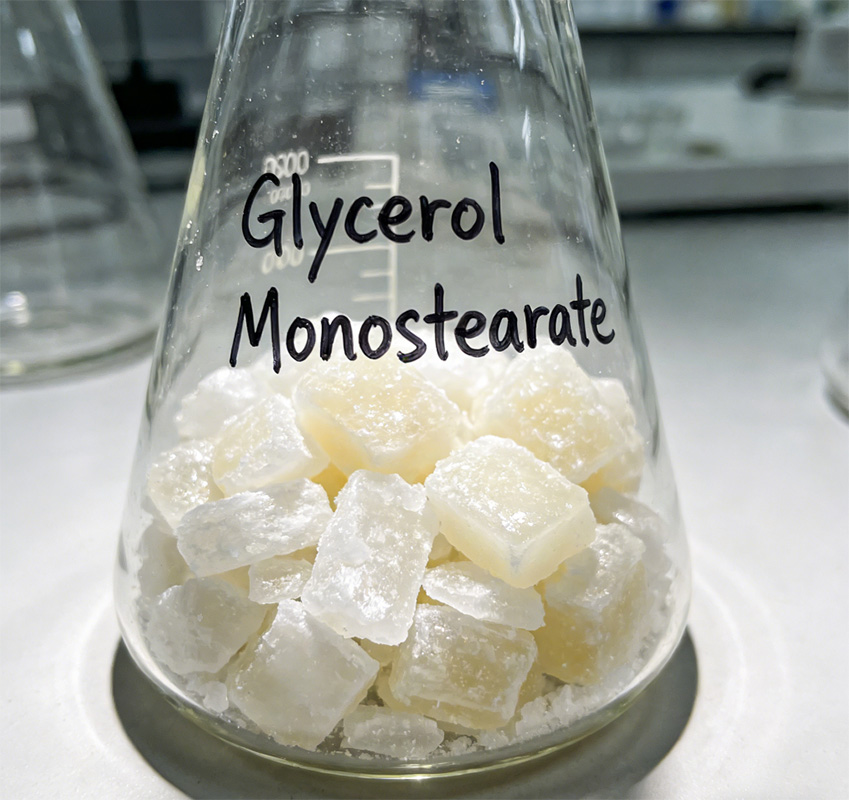
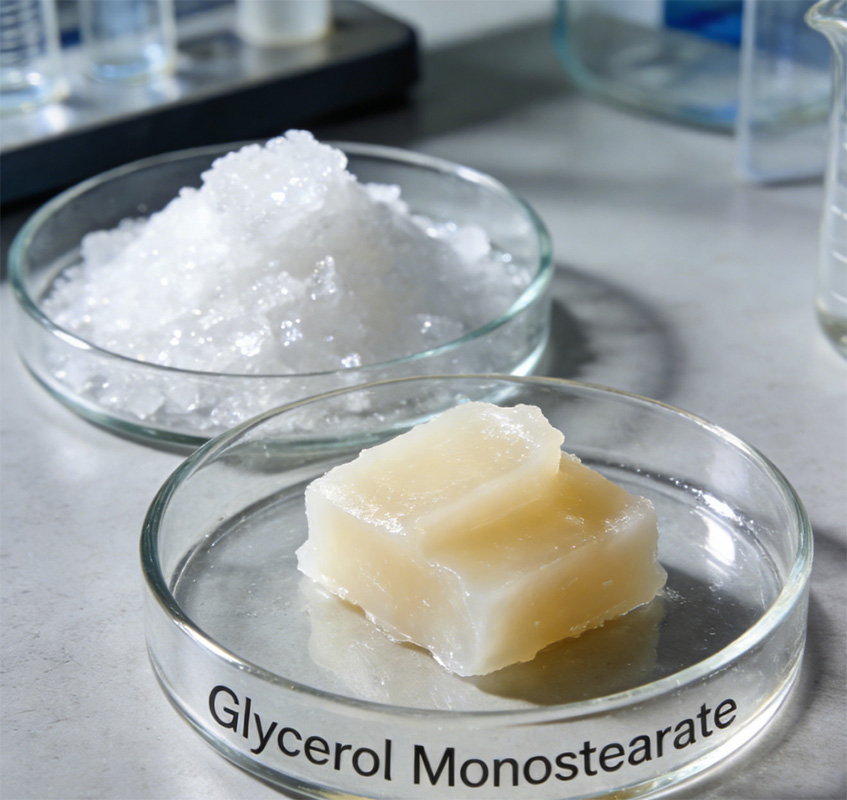
White to cream-colored beads, flakes, or powder |
| Monoester Content |
Typically 40%, 60%, or ≥90% (High purity) |
| Iodine Value |
≤ 3.0 g I₂/100g |
| Acid Value |
≤ 3.0 mg KOH/g |
| Melting Point |
55 – 65°C |
| HLB Value |
Approx. 3.8 (for pure monoester, indicative of W/O tendency) |
| Solubility |
Dispersible in hot water, soluble in hot oils and organic solvents |
| Packaging |
25kg multi-wall paper bag or carton |
FAQ
Q1: What is the meaning of GMS-40, GMS-60, etc.?
A: The number indicates the minimum percentage of monoesters (the active emulsifying component) in the product. The remainder is diesters, triesters, and free glycerol. Higher monoester content (e.g., GMS-90) provides stronger emulsifying power.
Q2: Is GMS of animal or plant origin?
A: GMS can be derived from both. Vegetable-based GMS is made from hydrogenated vegetable oils (like palm or soybean). We primarily supply non-GMO, vegetable-based GMS unless otherwise specified. Please confirm if you require a specific origin.
Q3: How does it prevent bread from staling?
A: Similar to sucrose esters, it forms a complex with starch (especially amylose), slowing down the retrogradation process that leads to firming and loss of moisture, thereby extending the soft shelf life of bread.
Q4: Can it be used in combination with other emulsifiers?
A: Yes, it is often used synergistically with other emulsifiers like SSL, DATEM, or lecithin to achieve optimal texture, volume, and stability in baked goods and other products.
Q5: What is the typical usage level in bread?
A: In bread, typical usage is 0.3% to 0.5% (flour weight basis). In cakes and whipped toppings, it can be 0.5% to 2.0%.
Q6: What is the MOQ?
A: Standard MOQ is 25kg (1 bag). We can provide 1kg samples for testing.
Additional Features
- Available in self-emulsifying grades (SE-GMS) that disperse more easily in water.
- Acts as an anti-foaming agent in some applications.
- Kosher, Halal, and food-grade certifications available

.jpg)

.jpg)