Nullam dignissim, ante scelerisque the is euismod fermentum odio sem semper the is erat, a feugiat leo urna eget eros. Duis Aenean a imperdiet risus.
Nullam dignissim, ante scelerisque the is euismod fermentum odio sem semper the is erat, a feugiat leo urna eget eros. Duis Aenean a imperdiet risus.
 author
Selecting the right juice concentrate for beverage manufacturing goes beyond flavor. You need stable Brix, repeatable taste, practical storage, and a sensible delivered cost. A sample may taste fine in the lab, then turn flat after pasteurization. That detail matters.
This guide compares apple orange and pineapple juice concentrate options for factory use. It also shows how an industrial fruit juice concentrate works with other food raw materials in drinks and fruit based foods.
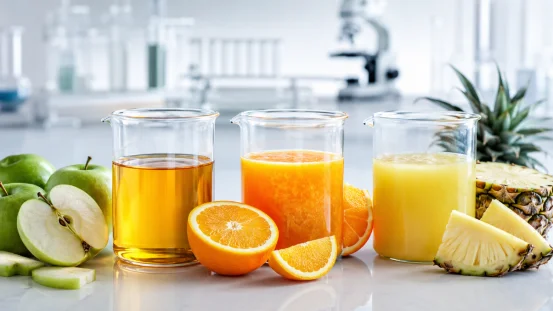
A useful juice concentrate comparison starts with the job each fruit must do. Apple can build sweetness and soluble solids without taking over the formula. Orange gives a clear citrus identity. Pineapple brings a stronger tropical note, sometimes at a low dosage.
| Parameter | Apple | Orange | Pineapple |
| Main role | Sweetness and solids base | Citrus flavor backbone | Tropical flavor or accent |
| Supplier stated Brix | At least 70°Brix | Confirm on the current COA | Confirm on the current COA |
| Flavor impact | Mild to medium | Medium to strong | Strong |
| Taste direction | Natural sweetness | Fresh sweet and sour citrus | Balanced tropical sweetness and acidity |
| Typical uses | Drinks, jams, candy, bakery fillings | Juices, drinks, ice cream, sauces | Drinks, desserts, canned foods, marinades |
| Trial focus | Color and taste after heating | Acidity, bitterness, aroma, color | Aroma strength and blend balance |
Quick check: Do you need a quiet base, a clear main flavor, or a tropical top note? The answer often narrows the field faster than a price list.
The cheapest bulk juice concentrate per metric ton may not give you the lowest cost per liter. Brix, dosage, freight, storage, added sugar or acid, and production corrections all change the figure. Reworking a 10,000 liter batch is costly.
For an early estimate:
Concentrate requirement = target soluble solids ÷ concentrate soluble solids × final batch weight
Other dissolved solids must also be counted. When you assess fruit concentrate for beverage production, compare dilution yield and sensory impact beside the quoted price.
Apple juice concentrate for beverages is useful when you need natural sweetness, body, and a mild base. Production includes washing, sorting, juicing, enzymatic treatment, filtration, centrifugation, sterilization, and filling. Solids are listed at no less than 70°Brix.
Apple juice concentrate suits fruit drinks, nectars, soft drinks, jams, confectionery, and bakery fillings. In a multi fruit drink, it can support orange or pineapple without becoming the obvious flavor.
Should the consumer notice apple? If not, test color, cooked notes, and aftertaste after heating. Apple juice concentrate for beverages works best when it stays in its lane.
A good orange juice concentrate supplier must provide current Brix and titratable acidity. They should share the Brix to acid ratio, pulp level, and color. Microbiological limits and storage details are essential too. Minor batch shifts can turn a sweet drink sour.
The spec sheet highlights concentrate from 100% fresh oranges. It has zero added sugar or preservatives. It brings a sweet, lively taste to juices, beverages, ice cream, and sauces.
Find out if it is clear or cloudy. Ask about recovered aroma and bitterness control. A reliable orange juice concentrate supplier provides a batch COA and origin documents. The sample must exactly match the final shipment.
Pineapple juice concentrate suits recipes needing a strong tropical vibe. The factory process involves fruit selection, juicing, and enzymatic treatment. Filtration, centrifugation, sterilization, and filling follow. This yields an aromatic, balanced profile.
Add pineapple juice concentrate to tropical drinks, desserts, or marinades. In a three fruit beverage, use apple for body. Let orange be the primary taste. Add pineapple for a bright lift.
Run a dosage ladder. Test three close inclusion levels under identical heat. Pineapple juice concentrate hides lighter flavors. Thus, the middle sample often reveals the most.
Concentrates never work alone. Other beverage formulation ingredients build sweetness, acidity, suspension, and aroma. They also dictate shelf life and mouthfeel. One concentrate acts differently in a clear juice drink versus a pulpy beverage.
Citric acid can sharpen acidity, while sodium citrate can buffer pH changes. Potassium sorbate works best in acidic systems. CMC or a compound thickener can reduce sedimentation and improve suspension. The compound system also offers acid and salt tolerance and a smoother mouthfeel.
Flavor may restore aroma lost during heating, but it should not hide weak concentrate quality. When buying fruit concentrate for beverage production, test the whole formula, not concentrate diluted only with water.
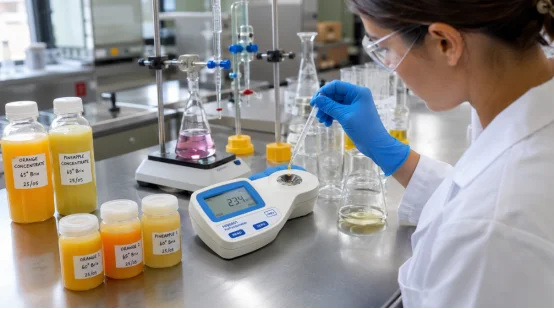
Good juice concentrate specifications make purchasing and R&D discussions easier. They stop two teams comparing different things under one product name. A proper juice concentrate comparison should use batch data.
Request these points before ordering an industrial fruit juice concentrate:
These juice concentrate specifications matter when a fruit juice concentrate for beverage industry project will run across several production months.
Once the formula is fixed, supply becomes part of product quality. A late shipment, mismatched document, or changed batch profile can stop a line. A juice concentrate supplier must connect technical details with daily trade work.
HUAFEI supports food ingredient sourcing, supplier coordination, warehousing, logistics, import and export work, and technical communication. Its scope covers concentrates, additives, flavors, packaging materials, and food machinery, with a strong focus on Nigeria, West Africa, East Africa, and other African markets.
For a beverage project, this range can coordinate concentrate with acids, stabilizers, flavors, and packaging. Supplier qualification, batch traceability, pre shipment inspection, documentation support, and delivery follow up are part of the stated approach. When reviewing a bulk fruit juice concentrate supplier, this support may beat a low quote with little context. Before requesting juice concentrate samples, send the drink type, target Brix, process, destination, quantity, and certificates.
Q1: Which juice concentrate for beverage manufacturing is best for a multi fruit drink?
A: Apple often works as the base, orange provides the main citrus identity, and pineapple adds a tropical accent. The final choice depends on Brix, acidity, color, and sensory trials.
Q2: Can apple concentrate be used when apple is not on the front label?
A: Yes, subject to local labeling rules and your formula. It may support soluble solids and sweetness without becoming the main recognized flavor.
Q3: What should you check before approving orange concentrate?
A: Check Brix, acidity, ratio, pulp, color, bitterness, aroma retention, microbiological limits, and performance after pasteurization.
Q4: How much pineapple concentrate should you add?
A: There is no universal rate. Test several nearby dosages because pineapple aroma can rise quickly and cover milder fruit notes.
Q5: How do you select a juice concentrate supplier?
A: Compare batch consistency, documents, traceability, sample accuracy, delivered cost, storage needs, logistics support, and response speed. The right juice concentrate for beverage manufacturing should work in your process, not just on paper.

.jpg)
.jpg)