Nullam dignissim, ante scelerisque the is euismod fermentum odio sem semper the is erat, a feugiat leo urna eget eros. Duis Aenean a imperdiet risus.
Nullam dignissim, ante scelerisque the is euismod fermentum odio sem semper the is erat, a feugiat leo urna eget eros. Duis Aenean a imperdiet risus.
 author
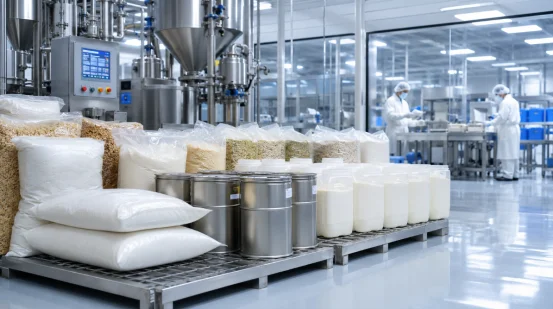
Choosing a food raw materials supplier affects taste, line efficiency, compliance, and cash flow. A cheap ingredient becomes expensive when a batch is rejected or production stops. Reliable sourcing focuses on risk, not price: suppliers must provide consistent specifications, clear records, and dependable service.
Good food raw material sourcing protects both the product and production schedule. Match the supplier’s controls, capacity, and communication to your factory.
Set quality standards before requesting a quote. Define moisture, purity, color, flavor, particle size, Brix, microbiological limits, allergens, shelf life, and packaging. Quality control should cover incoming and released goods, including how deviations are handled.
A sample may look excellent, but bulk production is the real test. Confirm that it came from a normal commercial batch and that every shipment follows the same specification.
Review actual delivery performance, not promised lead time alone. Ask about peak-season limits and delays. Strong suppliers use alternative sources, flexible routes, and multiple logistics options to reduce dependence on one origin, factory, carrier, or port.
Documents should prove that an ingredient can be released and traced. Evaluation is easier when every record follows one batch number.
Review certification requirements for your product and market. Check each certificate’s scope, production site, expiry date, and issuing body. Certification supports screening but does not replace testing.
Request a signed specification and COAs for several recent lots. Testing may cover identity, purity, active content, pathogens, heavy metals, residues, and allergens. Validated methods, raw-material and finished-goods checks, and vendor qualification reduce inconsistency and recall risk.
A traceability system should link each finished lot to source material, production date, test records, packaging, and shipment, while supporting a fast mock recall.
Require written notice before changes to origin, plant, formula, process, test method, packaging, or shelf life. Unreported changes often appear at the worst time.
Verify quality by checking documents, testing multiple batches, and running the material in your process. Laboratory compliance alone cannot show performance in a mixer, oven, homogenizer, or filling line.
Compare three lots when possible. A reliable food ingredient supplier should show narrow variation in critical parameters. For juice concentrate, check Brix, acidity, color, and flavor; for milk powder, check protein, fat, moisture, solubility, and microbiology.
Results close to a limit may pass on paper but leave little room for normal production variation.
Use the sample at normal dosage, temperature, hold time, and pH. Check sediment, foam, viscosity, color, flavor, yield, and shelf stability. A five-kilogram pilot can reveal more than a polished presentation.

A manufacturer may make a good product but lack spare capacity; a trading partner may offer broader sourcing while depending on several producers. Know which model supports the quote.
Confirm monthly capacity, utilization, seasonal constraints, and emergency output. Match MOQ to consumption and shelf life. Container pricing may lower unit cost, but excess stock can tie up cash or expire.
A reliable bulk supplier should explain how support will scale from trial orders to regular production and confirm pack sizes, loading quantities, and quantity tolerances.
Qualify primary and backup suppliers before a shortage. Confirm alternative sources, substitute sites, freight routes, and safety-stock options. An untested second source is not a real backup.
A supplier audit checks whether daily practice matches the documents. High-risk or high-volume materials deserve a site visit or independent audit.
Build a scorecard covering food safety, specification control, traceability, capacity, delivery, price, and service. Assign 25% to safety and compliance, 20% to consistency, 15% to delivery, and divide the remainder among traceability, capacity, cost, and support.
This prevents the lowest quote from dominating the evaluation.
Ask these questions before payment:
Red flags usually appear early. A missing test method, changing product name, or vague origin answer can become a major issue after payment.
Avoid suppliers that refuse basic documents, provide good samples but inconsistent bulk lots, quote far below market without explanation, or stop giving updates after payment. Confirm that the legal seller, producer, invoice name, and certificate holder match.
For factories buying several categories, HUAFEI serves as a sourcing and supply-chain coordinator rather than a single-product manufacturer. Its listed raw materials include whole and skim milk powder and apple, orange, and pineapple juice concentrates; the wider portfolio covers additives, flavors, packaging materials, and food-processing equipment.
This range can reduce sourcing conversations across beverage, dairy, bakery, and confectionery projects. HUAFEI coordinates qualified suppliers in China, quantity planning, shipment communication, export documents, and delivery follow-up, with experience in African markets. This helps when product matching and logistics must move together.
Q1: How to Choose a Food Supplier?
A: Define the specification, review certificates and COAs, test several lots, audit the supplier, confirm capacity, and begin with a controlled trial order.
Q2: What Is the Most Important Part of Food Raw Material Supplier Selection?
A: Safety and quality consistency come first. Compare price only after checking specification, traceability, and delivery risk.
Q3: Should You Buy from a Food Raw Materials Supplier or a Manufacturer?
A: A manufacturer may provide direct process control; a supplier may provide wider category coverage and logistics support. Choose the model that fits your volume and risk.
Q4: What Should a Food Ingredient Supplier Provide Before an Order?
A: Request the specification, recent COAs, certification records, allergen and origin information, MOQ, lead time, and claim terms.
Q5: Why Qualify a Backup Supplier?
A: A tested second source reduces the risk that a shortage, factory delay, or shipping problem will stop production.


Why Citrus Flavors Still Work in Soft Drinks, Tea Drinks and Energy Drinks

.jpg)
.jpg)