Nullam dignissim, ante scelerisque the is euismod fermentum odio sem semper the is erat, a feugiat leo urna eget eros. Duis Aenean a imperdiet risus.
Nullam dignissim, ante scelerisque the is euismod fermentum odio sem semper the is erat, a feugiat leo urna eget eros. Duis Aenean a imperdiet risus.
 author
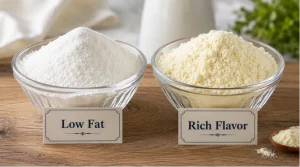
Picking between skim milk powder vs whole milk powder is more than just looking at facts about health. It changes how your food tastes and costs. It also alters texture, how long it stays fresh, and how you store it. It even changes how the food feels when people eat it.
Let’s say you run a dairy plant, a bakery, a drink factory, or a candy shop. Picking the wrong one brings big headaches right away. A milk drink might taste watery. A cake might not smell like real dairy. A low-fat yogurt might fall short on protein. Tiny choices about ingredients turn into huge factory messes.
The big difference between skim milk powder and whole milk powder is the milk fat. But in food making, this fat does a lot more than change the label. It changes the thickness and the rich taste. It changes how the powder acts. It even changes how well your goods hold up during long trips.
Workers make skim milk powder by taking most of the fat out of regular milk. People pick it when they want a low fat recipe or a high protein mix. HUAFEI offers a skim milk powder made just for healthy food makers. It has lots of protein and very little fat. It dissolves in water very well. The real technical data shows milk fat at max 1.5%.
It has protein at min 34% and moisture at max 4.0%. It ships in 25kg multi-wall paper bags with a PE liner. All this makes food grade skim milk powder super handy. You can use it for low-fat dairy products, protein drinks, and sports food. It works great in diet meals, baked goods, candies, soups, sauces, and medical foods.
Whole milk powder keeps all the natural milk fat. Based on HUAFEI’s notes, their whole milk powder comes from the famous golden dairy belt. This area sits at 40° north latitude. They make it from top-quality fresh milk using a spray drying method. It holds onto its natural milk fat and healthy parts. This powder has a protein content of at least 24%. It dissolves easily and boasts a very rich milky taste. That creamy flavor really matters. In some recipes, this good taste does way more work than a giant list of chemical add-ins.
For a lot of buyers, this is the biggest question. Your food might pass all the factory lab tests. But if the buyer says it tastes bad or weak, you have a huge problem on your hands.
Whole milk powder is mostly the better choice if you want a creamy feel. It gives a fuller body and a strong dairy taste. It fits right into baking, sweet candies, and thick dairy goods. It also works in milk drinks and sweet treats. Let’s say you bake biscuits or cakes. Maybe you make sweet fillings or rich milk drinks. In these cases, whole milk powder brings a thicker, warmer feel to your recipe.
Low fat skim milk powder is smarter when you want a lighter, cleaner taste. It helps when you want to sell a healthy image. Use it as the skim milk powder for dairy products and the skim milk powder for protein drinks. It is great for low-fat yogurt, remade milk, and gym foods. It packs your food with milk solids and protein, but it doesn’t add much fat.
How the powder acts on the factory floor is a big deal. It decides if your recipe runs fast or gets stuck. A buyer might only look at the price per ton. But the factory boss worries about other things. They care about mixing time, leftover bits, annoying clumps, and getting the exact same result every single time.
Both powders melt into water quite well if you buy good quality and store them right. Skim milk powder helps a lot during fast machine mixing. Why? Its low fat makes it much easier to handle. Whole milk powder gives a richer taste, sure. But it needs very careful storage. The fat in it breaks down faster if it gets too hot or sits in open air.
When looking at skim milk powder vs whole milk powder for beverages, skim milk powder fits low-fat and protein drinks nicely. Whole milk powder fits rich milk drinks. When checking out skim milk powder vs whole milk powder for baking, the right answer depends on the fat you already have. Does your dough already use oil, butter, or shortening? Then skim milk powder can work out fine. But if you want a deep dairy smell, whole milk powder for bakery is often the smarter pick.
Finding the best milk powder for food making depends on what you promise your buyers. Are you selling good health, protein, and a light flavor? Or do you want to sell a creamy, rich treat with a heavy dairy vibe?
Pick high protein skim milk powder if your item must be low fat. It is great for boosting protein, selling to athletes, or keeping a light dairy taste. It is also a smart move for places with tough shipping. If you have hot storage rooms or slow stock turning, this powder survives better.
Pick full fat milk powder if your food needs natural milk fat. It gives a rich milky flavor, a creamy feel, and a bolder taste hit. It is a perfect match for candy, baked goods, ice cream bases, dairy sweets, and fancy milk drinks.
Some factory owners actually use both. Blending them is common in dairy powder for food production. You do this to balance your costs, fat, protein, and flavor. Try making a small test batch first. This small step can save you from buying a huge shipping box of the wrong stuff. It sounds like boring advice, but it really works.

A milk powder supplier for food makers needs to do more than just give you a price. You want steady quality and the right papers. You need good packing boxes. You also want a partner who knows the places where you sell your goods.
Make sure you ask about the fat content, protein content, and moisture. Ask how well it dissolves, how long it lasts, and how it is packed. Also ask about storage rules, test papers, and tracking your batch. HUAFEI is a food ingredient supplier that focuses hard on dairy raw materials, food add-ins, and flavors. They also deal with packing stuff, big warehouses, moving goods, and global trade. They help out food makers, drink factories, dairy plants, and trade groups. They have lots of real practice in Nigeria, West Africa, East Africa, and other African spots.
The company helps check out suppliers, looks at goods before shipping, and gets export papers ready. They provide origin proofs and set up custom supply plans for you. For any buyer looking at a skim milk powder supplier versus a whole milk powder supplier, having this solid supply chain history stops a lot of common headaches.
Q1: What is the difference between skim milk powder and whole milk powder?
A: Skim milk powder has most of the milk fat taken out. Because of this, it is lower in fat but has more relative protein. Whole milk powder keeps the natural milk fat inside. This gives your food a richer taste and a much creamier feel.
Q2: Which is better skim milk powder or whole milk powder?
A: It really depends on what you are making. Pick skim milk powder for low-fat, high-protein, or healthy diet foods. Grab whole milk powder if you want a richer flavor and a thicker mouth feel.
Q3: Is skim milk powder better for low fat dairy products?
A: Yes, it is. Using skim milk powder for low fat dairy products is a very smart choice. It puts good dairy solids and strong protein into your food, but adds almost zero fat.
Q4: Is whole milk powder better for bakery products?
A: Most of the time, yes. Whole milk powder for bakery helps boost the dairy smell, the baked color, and that creamy bite. It shines best in breads, soft cakes, crunchy biscuits, and sweet center fillings.
Q5: Can you use skim milk powder and whole milk powder together?
A: Yes, you can. Lots of factories mix them both. They do this to balance out the fat, protein, taste, feel, and money spent. Running a small test batch is the safest way to find the perfect mix.


Juice Concentrate for Beverage Manufacturing: Apple, Orange & Pineapple
.jpg)
.jpg)