Nullam dignissim, ante scelerisque the is euismod fermentum odio sem semper the is erat, a feugiat leo urna eget eros. Duis Aenean a imperdiet risus.
Nullam dignissim, ante scelerisque the is euismod fermentum odio sem semper the is erat, a feugiat leo urna eget eros. Duis Aenean a imperdiet risus.
 author
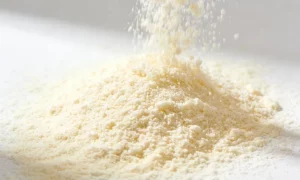
Think of nonfat dry milk as concentrated skim-milk solids, not simply as “milk in powder form.” It brings protein, lactose and minerals, but very little milk fat. Depending on the recipe, that bundle can hold water, reinforce a crumb, brown in the oven or give a drink more body. Mixing order and the later heat, fermentation or drying step decide which effect actually shows up.
Calling it a food raw material does not explain its job. Bread may use it for crumb and moisture retention. Biscuits may use its lactose and protein to build color. A beverage may need dairy body without the fat contribution discussed in our skim versus whole milk powder comparison. Water, pH and temperature change the response.
Production starts with pasteurized skim milk and removes most of its water. Under the Codex definition, skimmed milk powder contains no more than 1.5% milk fat and its milk solids-not-fat contain at least 34% milk protein. The U.S. term “nonfat dry milk” follows a different standard, although plant teams often discuss both powders together because the processing routes and end uses overlap.
For formulation work, start by separating the jobs of the solids. Protein takes up water and can reinforce structure. Lactose, a reducing sugar, becomes important when the product is heated and browning begins. Minerals influence the formula’s ionic environment. Taken together, these solids also create body and a familiar dairy note.
| Component | Main formulation role | Process condition that changes the result |
| Milk protein | Water binding, structure and nutritional solids | Heat history, pH, shear and other proteins |
| Lactose | Baked color and cooked dairy notes | Oven temperature, time, moisture and available amino groups |
| Minerals | Buffering and dairy-solids contribution | pH, salts and acidification |
| Total milk solids | Body, opacity and dairy character | Dosage, hydration and total formula solids |

None of those functions operates alone. Bread places the powder beside flour, yeast, sugar, fat and a limited amount of water. A drink presents another problem: the solids must disperse without leaving sediment or an unwanted cooked note. Give the ingredient one or two measurable jobs in each trial; a vague “improves quality” target is hard to troubleshoot.
Milk proteins attract and retain water. In bread and other baked foods, that can support a softer crumb and reduce the amount of free water available to move through the product. Tetra Pak’s Dairy Processing Handbook associates milk powder with greater bread volume and better water binding. That can help the crumb stay pleasant for longer, though flour strength, mixing, proofing and bake loss may easily change the outcome.
The same water-binding function can matter in cooked fillings, sauces and some processed foods. Here the protein adds solids and may help retain moisture after cooking. It is not, however, a universal substitute for the hydrocolloid or emulsifier already doing a specific job in the recipe. A filling that needs strong gel formation may still require starch, pectin or another texturizer.
Bench work should compare water addition, mixing time, consistency, bake loss and texture after cooling. A tight or dry result may indicate too much powder for the available water.
Watch a pale biscuit formula after a small addition: its surface may color sooner even if sweetness barely changes. The same effect can appear in bread crusts, cakes, crackers and cooked sauces. It comes from reactions between lactose and dairy protein during heating, provided time and moisture are suitable. The U.S. Dairy Export Council lists browning and color as useful effects in baked goods and sauces.
That color contribution is not identical to adding sucrose. Lactose is less sweet than table sugar, yet it remains available for browning. A formulator can gain color and dairy notes without making the product equally sweeter. This can be useful in savory biscuits, bread crusts and baked fillings where sweetness has a narrow limit.
High oven temperature, long residence time or too much powder may create a dark surface or a stronger cooked-milk note. Judge color beside flavor. Record powder percentage, surface color and sensory result at the same bake endpoint.
The “nonfat” label can be misleading in a texture discussion. Protein, lactose and minerals still raise total solids, and a beverage, yogurt base, frozen dessert or soup can feel noticeably fuller. Whole milk powder behaves differently because its fat also brings lubrication and a richer flavor.
A recombined drink can use the powder as its lean dairy base, leaving fat, sugar, flavor and stabilizer for separate adjustment. A cultured product gains protein solids and potential body, but the culture, pH and prior heat treatment still steer fermentation. Frozen desserts gain dairy solids too; the rest of the recipe determines what happens at the freezing point.
Hydrate the powder before judging body. Incomplete dispersion can look like weak functionality when mixing is the problem. Standardize water temperature, addition rate, shear and resting time first. Only then compare viscosity, sediment and flavor after an equal holding period.
Heat class records what happened to the milk before spray drying. That earlier treatment changes how much whey protein has denatured and, in turn, how the powder dissolves and behaves during the customer’s process. A low-heat grade retains more undenatured whey protein; a more heavily heated grade has a different protein state and may suit another use.
The label alone does not predict every factory result. A beverage team may care about dispersion, sediment and clean flavor. A bakery team may care more about water absorption, dough response and baked color. A cultured-product team watches acidification, viscosity and whey separation. Each team should connect the powder’s heat class to its own process outcome.
Good dissolution is only the first checkpoint. The same sample may still give the wrong color, texture or flavor after production, so the trial must include the real heating, fermentation or cooling stage.
Start with the finished product and write down the function required from the dairy solids. Then choose one process measurement and one finished-product measurement. This keeps the trial focused and makes results easier to compare.
| Application | Desired function | Process variable to control | Finished-product check |
| Bread or cake | Water binding and crumb support | Water addition, mixing and bake loss | Volume, softness and color after cooling |
| Biscuit or cracker | Controlled browning and dairy note | Powder dose, oven time and temperature | Surface color, snap and cooked flavor |
| Beverage | Dairy solids and body | Water temperature, shear and hydration time | Viscosity, sediment and flavor |
| Yogurt or cultured drink | Protein solids and body | Heat treatment, culture and fermentation endpoint | Acidification, viscosity and whey separation |
| Filling, soup or sauce | Solids, water control and dairy character | Addition order, heat load and pH | Texture, separation and reheated flavor |

Use the matrix with the full recipe. A water-only test is useful for spotting poor hydration, yet it says little about the effects of sugar, salt, acid, starch, fat or plant shear. Keep a control batch and move one variable per round.
For West African plants, record local water quality, ambient temperature and available mixing equipment. A formula developed elsewhere may need a revised hydration step or powder level before production.
Send the product type, target nutrition, powder dosage, water level, pH, mixing method, temperature and the result that needs improvement. Describe pale biscuit color, weak beverage body, dry bread crumb or whey separation.
At Huafei, we can use that information to discuss a suitable nonfat dry milk specification and sample. Our food raw materials guide covers the wider ingredient context. For reference, Huafei’s offered specification states at least 34% protein, with milk fat capped at 1.5% and moisture at 4.0%. The production trial, rather than the specification sheet alone, must confirm performance.
Both come from skim milk, but the names sit inside different market standards. Codex specifies a protein minimum for skimmed milk powder; the U.S. definition of nonfat dry milk does not apply that same standardized-protein rule. Read the supplier’s specification before treating the names as interchangeable.
Heating brings lactose into contact with amino groups in the milk proteins, allowing Maillard color to form. How far it goes depends on oven temperature, moisture, pH, time and the dose used.
It may add protein solids and useful water binding, but it cannot cover every stabilizing or emulsifying task. If the product relies on strong gelation, suspension or emulsion stability, retain the appropriate functional ingredient and test the powder in the complete formula.

Juice Concentrate for Beverage Manufacturing: Apple, Orange & Pineapple
.jpg)


.jpg)